

INTRO: The Dietary Guidelines for Americans
In January 2026, the USDA released its 2025-2030 Dietary Guidelines for Americans, which, among other things, contains the official guidance around alcohol risk and consumption limits. The advisory document stated simply that one should “[c]onsume less alcohol for your health.”
This advice represented a double-edged sword for public health advocates. On the one hand, the one point it delivered has been a central contention of alcohol harm advocates for years: there is no safe level of alcohol consumption. On the other hand, it erased an entire page of context and education, including warnings about the links to cancer.
This came after a contentious period of consideration in which the U.S. Department of Health and Human Services (HHS) delayed, then cancelled the publication of a report detailing the myriad health risks from alcohol consumption. For those who had been following industry lobbying efforts and the government’s intertwining and sometimes conflicting narratives around the physical harms of alcohol, the action was not so much shocking as inevitable. The suppressed report, called simply the Alcohol Intake & Health Study, ran counter to a lucrative industry narrative, namely that alcohol has health benefits.
 Yet by trying to erase the report from existence, the industry reignited the discussion over whether alcohol can be safe to consume at all. Is there really any such quantity of “moderate” drinking that produces health benefits? In past years, that narrative had been laundered by 60 Minutes, trumpeted as the “French Paradox,” and held forth as the reason for an aborted, industry-funded, NIAAA-run trial.
The only problem? It’s not true. Year after year, the evidence mounts that there is no healthy level of drinking. And so we get the excessively vague 2025-2030 Dietary Guidelines, caught between the preponderance of evidence that alcohol simply cannot be consumed risk-free, and industry pressures to endorse the idea of drinking to live longer.
That idea of “healthy drinking” is the holy grail for the alcohol industry. From Big Alcohol’s standpoint, the only thing more financially lucrative than convincing people not to quit is talking to people who are worried about their health to start drinking. The origin of the myth is buried in a long history of bad science distorted by industry; its effects are to create an endless discussion that mires U.S. alcohol policy in antiquated rhetoric, far behind the cutting edge of epidemiological research.
The below FAQ gives an overview of healthy drinking as a concept: where it originated, what are its flaws, and what are the consequences from leaving it unchallenged?
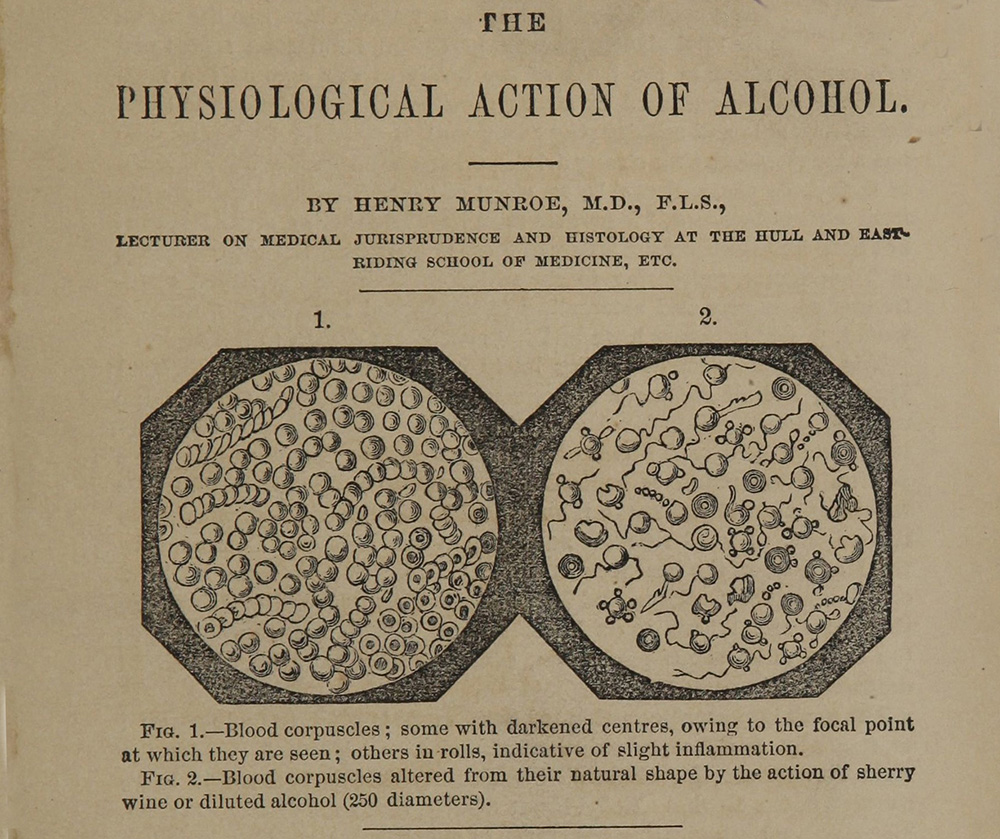
Image by Val.Pearl via Flickr, used under CC license.
Q: Is drinking alcohol good for you?
Unambiguously, alcohol causes or influences numerous physical and social harms, including a number of preventable causes of death.  The CDC’s Alcohol-Related Disease Impact system tracks 57 different harmful outcomes associated with alcohol use, while a growing body of research describes alcohol’s many harms to others.
Of the harms to the drinker, some of them are physiological, including cancer, liver failure, and neurological damage. These usually (but not exclusively) arise from long-term drinking. Other harms are largely attributable to acute overconsumption—often but not exclusively binge drinking. Binge drinking is strongly associated with motor vehicle crashes, homicide, and suicide, and these risks are overrepresented in young drinkers. Binge drinking also increase vulnerability to infection and overdose, risks that may have been exacerbated in recent years as both pathogens and a dangerous drug supply have run rampant.
For many of these morbidities and mortalities, the risks start at the first sip, and rise from there.
Q: Where did the myth of "healthy drinking" originate?
Q: Why did the flawed "j-shaped curve" concept become so pervasive?
Before the 1980s were through, major studies were challenging the “j-shaped curve” pattern of alcohol risk. But before the academic discussion could play out (though to some degree, it is still playing out), publicists for the alcohol industry fed noted television news program 60 Minutes a piece on the “French Paradox.”  According to the 1991 serial, the French were exceptionally long-lived and less prone to cardiovascular disease despite eating high-fat, high-cholesterol diets.* The reason, according to the report, was red wine consumption.
The only problem? It wasn’t true. Indeed, the purportedly healthy French relationship with alcohol has itself been questioned by… the French, who have launched national initiatives to relieve the burden of alcohol harm.
* Ironically, this debate would hinge around a parallel industry conspiracy (literally) to distort science. Along with Big Alcohol’s ongoing misrepresentation of risk research, the sugar industry had, starting in the late 1960s, worked to lay the blame for cardiovascular and metabolic diet risk entirely on the shoulders of fats and cholesterol. Only in the 2000s did watchdogs uncover the decades-long web of funding to pliable scientists, generating sloppy science that let low-fat, high-sugar foods dominate the marketplace, to the detriment of millions worldwide.
Q: Why does the "j-shaped curve" misstate so many risks of alcohol?
Industry proponents have long anchored their arguments in favor of a j-shaped risk curve on a particular kind of methodology: longitudinal population-based observational studies. These studies are characterized by having a large number of participants assessed for numerous health outcomes at once, over a long period of time.
There are major advantages for this kind of research, and it’s clear why some would be drawn to them. They capture a large amount of data, and create “sandboxes” for researchers to dig through for interesting relationships. Yet these strengths also make findings vulnerable to overlooking confounders and modifiers. These overlooked variables are precisely what makes the “j-shaped curve” a dubious finding.

Reviewing the studies which purport to find a protective effect from alcohol consumption, three consistent flaws emerge.
- Failures to address just why nondrinkers opt not to drink. An initial wave of criticism of “healthy drinking” studies pointed out that the researchers failed to check if the non-drinkers were in fact former drinkers. Former drinkers would have often had health-related reasons to stop drinking, leaving them at greater risk of early mortality. Reasons for abstention are far from the only confounder that these studies fail to adapt for. They often miss geographic or socioeconomic vulnerabilities, behavioral comorbidities, and preexisting genetic or other biological risks that would encourage someone not to drink.
- Imprecise measurements of actual alcohol consumption. Many of these studies are intended to be wide-angle pictures of health outcomes, and therefore do not have particularly specific questions about how much respondents drink. This can lead to respondents being miscategorized between consumption levels. It also makes the data highly vulnerable to participants underestimating their own self-reported alcohol use, with no mechanism to validate or double-check those responses.
- Use of all-cause mortality as an outcome. All-cause mortality includes any number of causes of death that may have no direct association with alcohol, but can be associated with the confounders listed above. Critics have shown that “healthy drinking” papers have a tendency to connect alcohol consumption levels with outcomes that are clearly physiologically unrelated to the actions of alcohol. The “view from above” afforded by an all-cause tally is all but guaranteed to contain this flaw.
Q: Why do many studies now say there's "no safe level" of alcohol consumption?
Q: What makes alcohol's real harms such a hot-button issue right now?
Q: Why not settle the matter with a randomized controlled trial?
What can we do to set the record straight?
The industry won’t readily let go of the potential windfall from manufacturing the “healthy drinking” narrative and the j-shaped curve. But even despite the suppression and distortion of emerging evidence, the public perception of alcohol as unsafe has continued to grow—though so too has alcohol’s toll on our friends and neighbors.
The public deliberations around the USDA Dietary Guidelines have ended for this five-year review period, and the final product glosses over alcohol risks. But other, thorough, evidence-based sets of recommendation exist (such as these, from the U.S. Alcohol Policy Alliance), and there remain many opportunities to promote them and grow public understanding of harm and increase individuals’ control over their own health, including: