Hollowing Out Labor Protections to Make Self-Checkout an Alcoholic Trojan Horse
As California’s 2025 legislative session entered its final stretch, the corporate thirst for cutting personnel costs collided with Big Alcohol’s thirst to move more product. The effort hinges on SB 442, a bill that seeks to ensure grocery and big box store employees still have jobs even as the use of automated checkout kiosks expands. The proposed policy would protect jobs even as it stands in the way of cutting employee costs. But as the bill moved through the deliberative process, the alcohol industry lobbyists were busy using it as a back door to legalize alcohol sales by self-checkout.
SB 442 would place some obligations for staffing levels on grocery and “big box” stores, in an effort to prevent corporations from cutting staff to the bone (which results in quite literally putting the labor obligation on customers, who have to perform the scanning and bagging themselves). The bill currently sits in front of the Assembly Appropriations committee, its last hurdle but one. Before it can reach the governor’s desk for signing or veto, it must be voted out of the “suspense file” by the end of the month. Leveraging the bill’s do-or-die position, the grocery lobby seems to have engaged in an all-out media blitz to make self-checkout a legally sanctioned method of alcohol sale.
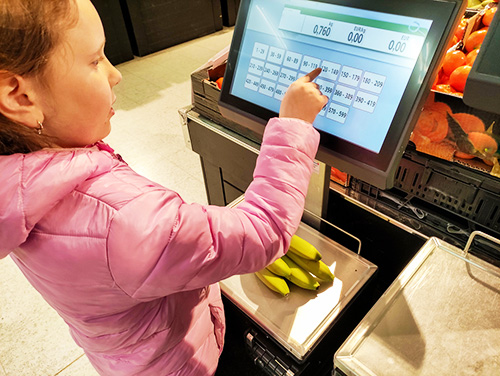
California currently allows alcohol sales only is they are overseen directly by a clerk, who is obligated to check for legal age, visible intoxication, and other indications that the sale may be illegal or dangerous. This also presents a discouragement to shoplifting, especially by youth. This contrasts with the self-checkout schema in place in other states, where purchases can be completed by scanning the bar code on the back of a legal ID. (A variation of this, biometric age verification, relies on unaccountable “black box” customer surveillance technology to ostensibly verify a legal sale. The legislature has started approving such technologies in the last few years.) All these methods are riddled with loopholes, for both youth and adults, because there’s no person at the point of sale able to rationally assess whether the transaction should be completed.
Youth Readily Obtain Alcohol via Self-Checkout Lanes
And boy have those loopholes been exploited. A 2017 study using underage “secret shoppers” asked to obtain alcohol through self-checkout found that the sales were halted only 11.2% of the time—meaning nearly 9 in 10 attempts for minors to purchase alcohol via self-checkout were successful. According to the researchers, on a single day, four 17-year-old secret shoppers were able to completely fill the trunks of two station wagons with alcoholic beverages. In the past year, a paper from a panel of key alcohol epidemiology researchers raised further alarm based on the rise of ready-to-drink cocktails. Because these emerging products are packaged and branded very similarly to soda, self-checkout can easily allow an entrepreneurial thief to scan the soda, then place the alcoholic drinks in the bagging area—giving no reason to trip the “unexpected items” alarms with the self-checkout kiosk.
Of course, shoplifting can occur even under the current illegalization of alcohol. One of the most important ways to dissuade theft—and therefore underage access—is simply to make it less convenient. According to market research, retail theft is more often a product of opportunity than plotting. Self-checkout, with its lack of human interaction (or, if there is human interaction, a brief and harried encounter with a clerk who is tasked for looking over many machines at once), encourages the attempt. It also removes any discouragement for people who are visibly intoxicated, dangerously agitated, or otherwise raising red flags that would encourage a clerk to cancel a sale. One of the best inhibitions for this kind of dangerous sale is the expectation that the attempt to buy alcohol will result in social discomfort.
Self-checkouts are guaranteed to be free of social discomfort. When it comes to alcohol sales, they are, indeed, antisocial.
Who Actually Benefits from Selling Alcohol Through Self-Checkout?
The last and most obvious risk, of course, is that making it faster and easier to buy alcohol will result in more impulsive drinking. A little friction reduces impulsive purchases, and encourages mindful consumption—an approach to alcohol that becomes more pervasive the more people engage in it (hence the benefits of “Dry January”). In the broad lens of environmental prevention, this manifests as declines in alcohol-related harms as alcohol outlet concentrations decrease. On the individual scale, it can be influenced by the simple act of picking up a handle of vodka, thinking about the slightly longer wait to reach the staffed register, and deciding one does not really need the product. This results in more mindful drinking and fewer impulsive purchases, but despite the obvious benefits to customers and society, the alcohol industry primarily views this as lost profits.
These fears are expressed through the current rash of urgent quotes from the grocery lobby in news coverage surrounding SB 442, but research suggests that self-checkout has little effect on customer’s desire for booze within traditional grocery stores. Unless these stores engage in aggressive marketing and store-design strategies to increase intention to buy alcohol, it seems likely the real beneficiaries will be not groceries but the alcohol mega-stores such as BevMo and Total Wine—stores for which self-checkout is not currently an option, no matter the product. By lifting the requirement that these stores staff every checkout aisle, the grocery lobby not only stands to accelerate the rate at which these specific kinds of liquor stores can sell products, it paves the way to cutting hundreds of working-class jobs across the state. This not only creates additional risks by encouraging heavier drinking, it explicitly undermines the intent behind union-backed SB 442.
For now, SB 442’s authors show no indication that they are considering lifting the alcohol self-checkout ban. However, once a bad idea is floated, it becomes difficult to push it back down. The fate of the bill will be determined in the next few weeks. The pressure to expand alcohol sales by any means available, however, will always be there.