Playbook for Underage Prevention Leaves Youth Fighting Big Alcohol Alone
Since the new administration took office last year, advocates against the harms of the alcohol industry have been anxiously mulling one key question: will the country’s new leaders go out on a limb to protect the public’s health, or will they abandon their constituents at the behest of Big Alcohol? Alcohol is one of the leading modifiable risk factors for death and illness worldwide, and U.S. Department of Health and Human Services (HHS) Sec. Robert F. Kennedy, Jr. has vowed he will confront industry drivers of poor health. Yet the latest strategy document released by HHS seems reluctant to grapple with the impacts of alcohol as either a product or an industry.
Alcohol has long been prominent among preventable risks, but the consequences have been rising steeply in recent years. Between 2016 and 2021, estimated annual mortality rose 29%, from 137,927 in 2016 to 178,307 in 2021. Children and adolescents face particular risk, since alcohol plays a major role in many of leading preventable causes of death for younger people, including motor vehicle crashes, homicide, suicide and overdose. By reducing the likelihood of these sudden, catastrophic events, robust alcohol prevention strategies create immediate and powerful positive impact on youth.
Yet the guiding strategy from HHS leadership, released in September of 2025, fails to confront the reality of the risks created by underage drinking. The 20-page plan, titled both “The MAHA Strategy” and “Make Our Children Healthy Again,” highlights some commercial impacts on health, particularly those caused by the mass-market food industry, as well as the pharmaceutical industry. But it gives only a single mention to alcohol.
That mention mandates that “[t]he Surgeon General will launch an education and awareness initiative on the impact of alcohol, controlled substances, vaping, and THC on children’s health.” This recommendation leaves a great deal on the table in terms of effective interventions. Aside from the fact that the Surgeon General already runs awareness campaigns around alcohol and other drugs, educational campaigns on their own have limited impact as prevention strategies. A Lancet review of cost-effectiveness of various interventions to reduce alcohol harm was unable to come up with a figure for the cost per year-of-life saved from either in-school or mass media educational campaigns—not because the issue was too complex, but because neither had any measurable impact on health.
This contrasts with the truly protective strategies, identified not just by the Lancet authors but the World Health Organization and many others. These strategies include raising alcohol taxes, limiting alcohol availability, and restricting alcohol marketing. These interventions differ from educational campaign in three important ways:
1) They change the retail environment instead of placing the entire burden on the individual.
2) They rely on policy change and accountability from those in power.
3) They reduce the total amount of alcohol sold, and therefore may impact industry profits.
Eschewing these options in favor of the “educational campaign” suggests that aggressive talk about confronting corporations whose business practices harm children runs aground when it comes to committing to the kinds of strong actions that run counter to the interests Big Alcohol. Not that this administration is unique in this respect—across the spectrum of high-income countries, governments consistently favor hands-off approaches to structural changes that lower the risk of harm. The Institute for Alcohol Studies summarizes work from researcher and industry birddog Mark Petticrew and colleagues, pointing out that the industry always pushes interventions “that blame the individual person for the problem, but obscure the role of the industries in causing harm.” The deference the Make Our Children Healthy Again report pays to the precise industries that made effective policy-based prevention unthinkable should come as no surprise, as it reflects perennial institutional failure.
That said, prevention, particularly at the scale of HHS, remains a living science. Despite the ineffectual recommendations—and the elimination of many significant NIH and CDC prevention programs—there is still time to realize an effective national strategy to protect youth from corporate exploitation. The current HHS leadership has been in place for less than a year. The next step, then, is to persuade them to stop perpetuating previous administrations’ failures. An empowered MAHA HHS still has the opportunity to step up and confront Big Alcohol, embrace evidence-based prevention, and actually embody to the health-centered brand they want to create.
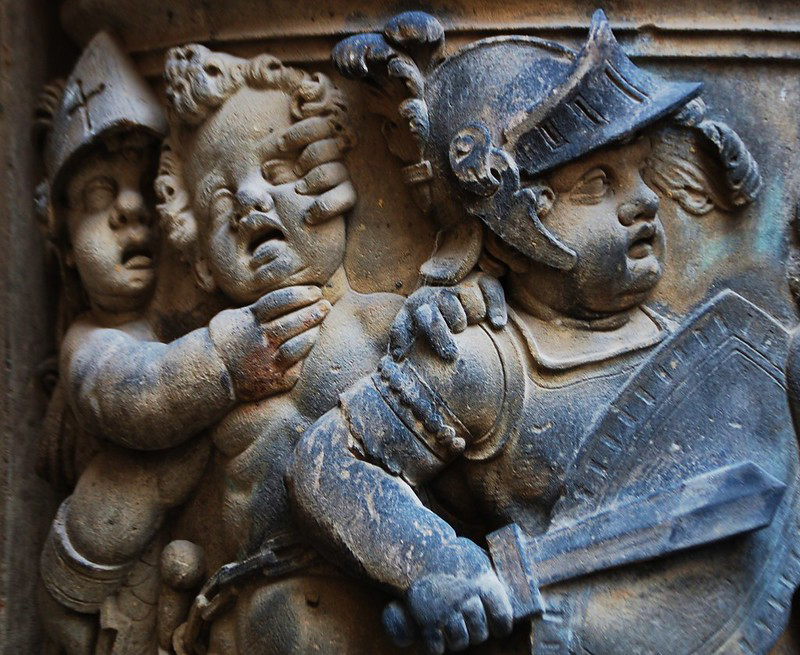
Image courtesy Daniel Silliman via Flickr. Used under Creative Commons license.